

It’s not always a big moment that leads someone to look into implant supported dentures. More often, it’s something small that keeps coming up. A denture that doesn’t stay put when you’re eating. Having to think twice about certain foods. Reaching for adhesive more often than you’d like, just to get through the day without adjusting things.
On their own, none of those things feel urgent. But when it keeps happening, it starts to wear on you. At some point, it’s less about getting by and more about wanting something that feels steady and predictable.
That’s where implant-supported options like All-on-4 come into the picture. Instead of resting on the gums, the teeth are anchored in place, which changes how they function day to day. From there, the focus shifts to whether that kind of stability makes sense for you—and what the process actually looks like.
What All-on-4 Dental Implants Actually Are
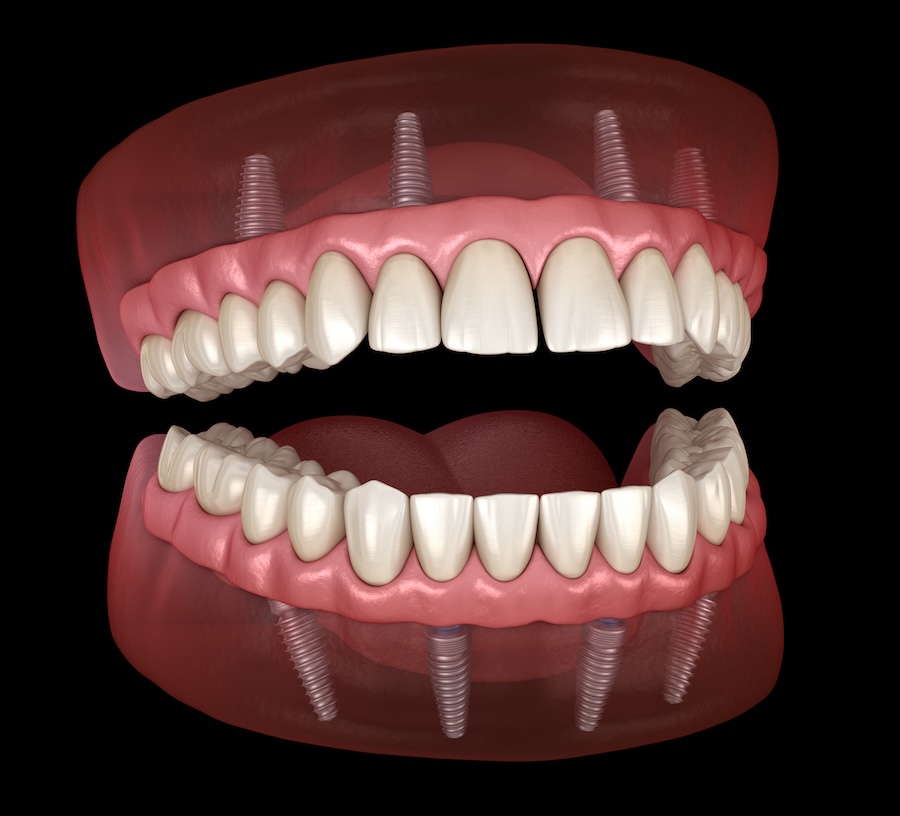
All-on-4 is a way to replace an entire upper or lower set of teeth using just four dental implants as support. Those implants are placed in the jaw and act as anchors. A full arch of teeth is then attached to them, which means the restoration isn’t relying on suction or adhesive to stay in place. Instead, it’s secured to something solid underneath.
Another key part of this approach is how the implants are positioned. The back implants are often placed at an angle, which helps make better use of the bone that’s already there. Because of that, many patients can move forward without needing bone grafting, which keeps the process more straightforward.
From a day-to-day standpoint, the biggest difference is how the teeth feel once they’re in place. They don’t shift the way traditional dentures can, and you’re not having to think about them throughout the day in the same way.
Who All-on-4 Is Typically For
All-on-4 is usually recommended when replacing a full arch of teeth makes more sense than treating teeth individually. That might include patients who are already wearing dentures but feel like they’re constantly adjusting them or limiting what they eat. It can also apply to patients with multiple failing teeth, where continuing to repair each one doesn’t provide a long-term solution.
In other cases, bone loss has made traditional implants more complicated, and the All-on-4 approach offers a way to work around that. Because of how the implants are placed, it often allows patients to move forward without more extensive procedures.
The best way to know if it’s a fit is through an evaluation. That gives a clearer picture of bone structure, overall health, and what kind of result makes the most sense long term.
What the Procedure Looks Like
The process starts with detailed planning, which is what allows everything to come together smoothly on the day of treatment. Imaging is used to map out the placement of the implants so they can support the full arch effectively. Once that plan is in place, the implants are placed in the jaw during a single procedure.
In many cases, a temporary set of teeth is attached the same day or shortly after. That means you’re not going without teeth during the healing period, even though everything underneath is still stabilizing.
From there, the implants begin to integrate with the bone. That process takes time, but it’s what creates the foundation for the final set of teeth that will be placed later.
What Recovery Feels Like at First
The first few days after the procedure are usually the most noticeable part of recovery. It’s common to have some swelling, soreness, and a general feeling of tightness in the jaw. These symptoms are expected and tend to improve steadily over the first week. Most patients are able to stay comfortable with prescribed or recommended medication.
During this time, diet plays an important role. Softer foods are recommended to avoid putting pressure on the implants while they’re still healing. Even though you may have temporary teeth in place, the underlying structure needs time to stabilize.
Following post-operative instructions closely makes a big difference here, especially in keeping things on track during the early phase.
The First Few Weeks After Placement
As the initial soreness improves, the focus shifts to healing and getting used to the new teeth. You may notice small adjustments in how your bite feels or how you speak at first. That’s normal, and most patients adapt fairly quickly as the muscles and tongue adjust. It’s a short transition period, but it’s noticeable enough that it’s worth expecting.
Diet is still somewhat limited during this stage. Even though things feel better, the implants are still integrating with the bone, so sticking to softer foods helps protect that process.
Follow-up visits during this time allow everything to be monitored and adjusted if needed. These appointments are part of making sure the final result feels as stable as it should.
What Changes Once Healing Is Complete
Once the implants have fully integrated and the final teeth are placed, things tend to feel more consistent. Eating becomes more straightforward, especially with foods that require a bit more pressure. You’re not dealing with movement or relying on adhesives, which removes a lot of the day-to-day adjustments that come with traditional dentures.
Speaking also tends to feel more natural, since there’s less shifting to work around. Over time, most patients find they’re not thinking about their teeth as much, which is usually the goal.
Daily care is still important, but it’s more about maintaining the health of the implants and surrounding tissue than managing the position of the denture itself.
All-on-4 Dental Implants in Richmond, TX at Dental Garden
At Dental Garden in Richmond, TX, Dr. Reza Memar works with patients who are looking for a more stable, long-term solution for missing teeth. All-on-4 dental implants can be a strong option for patients who are ready to move away from the limitations of traditional dentures.
If you’ve been dealing with movement, discomfort, or constant adjustments, it may be worth taking a closer look at what implant-supported options could offer. You can call the office or schedule a consultation to go over your situation and get a clear idea of what the process—and recovery—would look like for you.

Visit Dental Garden
We can see you as soon as today!