

Most people don’t think much about how a tooth gets repaired—until they’re sitting in the chair and hear two options: filling or crown. That’s usually when questions start to come up. Why one instead of the other? Is one stronger? Will it last longer?
The choice depends on a few key factors, including how much of the tooth is still healthy, where the damage is located, and how much pressure that tooth handles during everyday use.
At Dental Garden in Richmond, TX, Dr. Reza Memar looks closely at each situation before recommending treatment. The goal is not just to repair the tooth, but to choose an approach that holds up well over time and feels comfortable day to day.
Understanding the Difference Between a Filling and a Crown
Both fillings and crowns are used to repair teeth, but they serve different roles.
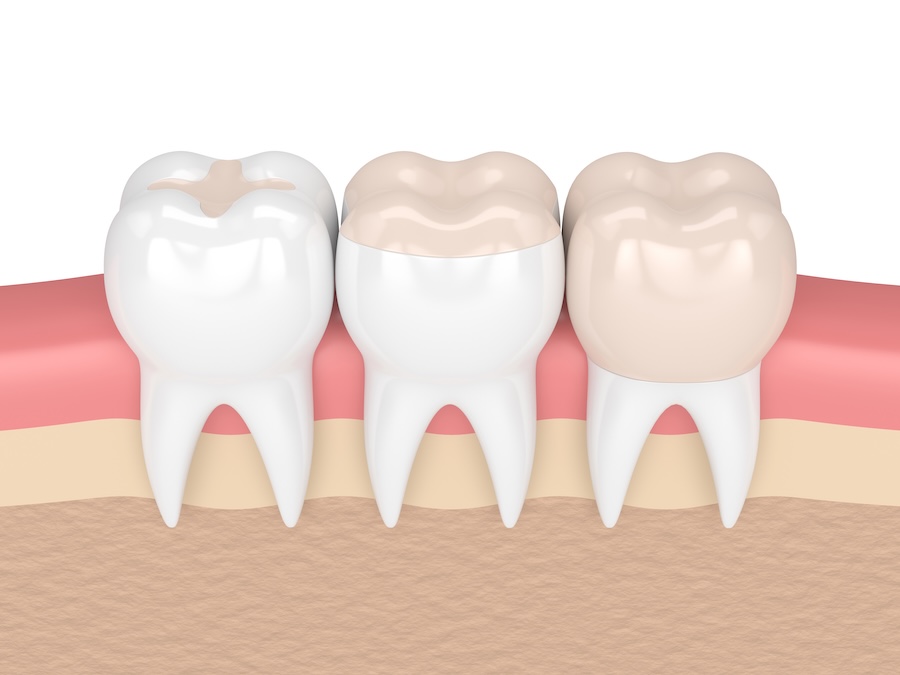
A filling is used when the damage is more limited and the remaining tooth structure is still strong. It restores a specific area—often after decay is removed—while keeping most of the natural tooth intact.
A crown, by contrast, covers the entire visible portion of the tooth. It is used when the tooth needs more support and protection than a filling can provide.
A simple way to think about it:
-
Fillings repair part of the tooth
-
Crowns protect and reinforce the entire tooth
The decision comes down to how much structure remains and how much support the tooth needs moving forward.
When a Filling Is the Right Choice
Fillings are typically recommended when damage is smaller and contained.
This might include:
-
Small to moderate cavities
-
Minor chips or early wear
-
Areas where decay has not spread deeply
Tooth-colored composite fillings are commonly used because they blend naturally and bond directly to the tooth. That bond helps support the remaining structure rather than simply sitting within it.
In many cases, a filling is the most conservative option. It resolves the problem while preserving as much of the natural tooth as possible. However, when a larger portion of the tooth is affected, a filling alone may not provide enough support.
When a Crown Becomes the Better Option
As more of the tooth is affected, the conversation often shifts toward crowns.
Crowns are typically recommended when:
-
A large portion of the tooth has been weakened by decay
-
The tooth has a fracture or visible crack
-
An existing filling has become too large or unstable
-
The tooth has had a root canal and needs reinforcement
Back teeth, in particular, absorb significant chewing pressure. When their structure is compromised, covering them with a crown helps distribute that pressure more evenly.
Instead of reinforcing one section, a crown supports the tooth as a whole, which can reduce the risk of further damage over time.
Why the Decision Isn’t Always Clear-Cut
Some situations fall clearly into one category or the other, but many do not.
There are cases where a tooth could be restored with a large filling—but doing so may increase the likelihood of fracture over time. In those situations, a crown may be recommended not because a filling isn’t possible, but because a crown offers more long-term stability.
Other factors also come into play, including:
-
Bite alignment and chewing forces
-
Teeth grinding or clenching habits
-
The location of the tooth in the mouth
-
How much healthy tooth structure remains
This is where clinical judgment matters. Looking at these details helps guide the decision toward something that will last, not just something that works for now.
Cost and Long-Term Value
It’s natural to think about cost when comparing these options.
Fillings are usually less expensive upfront and can often be completed in one visit. Crowns involve more time, materials, and lab work, which increases the initial cost.
At the same time, durability matters. In situations where a filling may wear down or fracture more quickly, a crown can provide a more stable, longer-lasting solution. Rather than focusing only on the initial cost, it can be helpful to consider how the restoration will perform over time and whether it may reduce the need for additional treatment later.
What to Expect During Treatment
Fillings are typically completed in a single appointment. After removing decay, the material is placed, shaped, and polished to restore the tooth.
Crowns usually involve two visits. The tooth is prepared and shaped, and a temporary crown is placed. A custom crown is then fabricated and bonded in place at a second appointment.
Both options are designed to restore comfort and function, allowing you to chew and speak normally again.
Dental Crowns vs. Fillings at Dental Garden in Richmond, TX
Choosing between a crown and a filling is less about preference and more about what the tooth needs to stay strong and functional.
At Dental Garden in Richmond, TX, Dr. Reza Memar evaluates each tooth carefully and explains the reasoning behind every recommendation. Patients are encouraged to ask questions, understand their options, and feel comfortable with the plan moving forward.
If you have a damaged tooth or have been told you may need a crown or filling, scheduling an appointment at Dental Garden in Richmond, TX is a practical next step. A thorough evaluation can help determine the most appropriate way to restore your tooth and protect it long-term.


Visit Dental Garden
We can see you as soon as today!